
What a Nissen hut is — and why it resists insulation
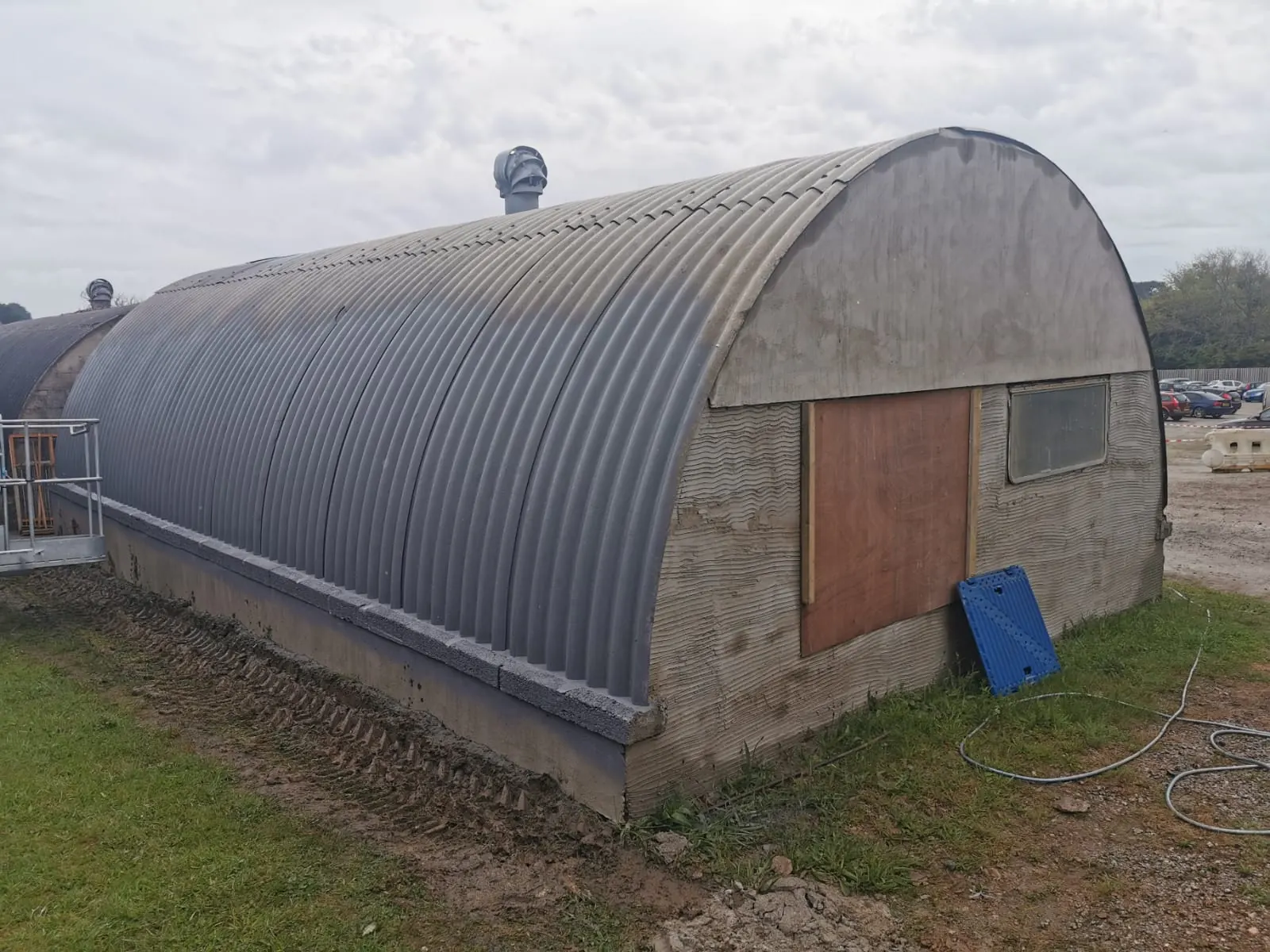
Nissen huts are the curved, corrugated-steel arches mass-produced for the British military in the First and Second World Wars. Thousands survive across the UK, now reused as farm stores, workshops, depots and rural commercial units. Their semi-cylindrical profile is exactly what makes conventional insulation so awkward to fit.
Rigid boards and batts are designed for flat planes. On a continuous curve they leave gaps, cold bridges and unsupported edges. The thin steel skin also sweats heavily, so any system that traps moisture against the metal invites corrosion. A continuous, self-bonding solution is far better suited to the geometry.
Why closed-cell spray foam suits curved steel
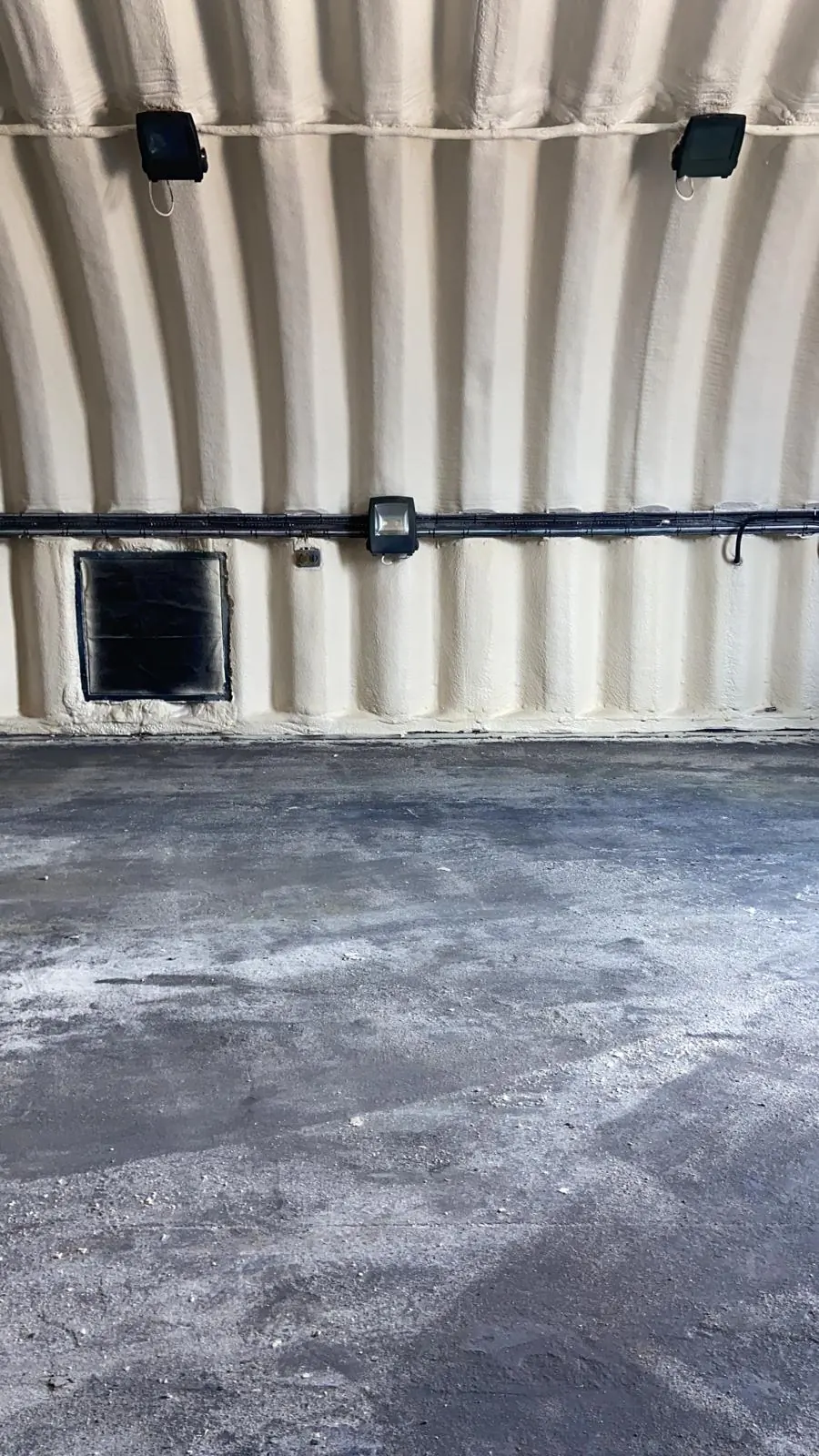
Enverge closed-cell spray foam (closed-cell trade name Nexseal LE) is sprayed as a liquid that expands and self-bonds to the substrate as it cures. It follows every corrugation and the full arc of the roof, leaving no gaps to cut, fold or fasten around. There is nothing to mechanically fix — the foam adheres directly to the cleaned steel.
Because closed-cell foam is a continuous skin, it addresses the two problems these huts share: heat loss through the thin steel and surface condensation on cold metal. As a UK distributor of record, Duratite supplies a spray foam product carrying a 25-year manufacturer-backed product warranty.
Heritage status, consent and the exterior
Some Nissen and Quonset huts are listed or sit within conservation areas, particularly former airfield and military sites. Where a building is listed, alterations may require listed building consent, and you should always confirm with the local conservation officer before work begins.
The decisive point for heritage projects is that spray foam is applied internally. The corrugated-steel exterior — the character that gives these buildings their significance — is left completely unchanged. No external cladding, fixings or profile alterations are involved, which makes an internal foam lining far easier to reconcile with heritage obligations.
Tackling condensation in thin-skinned arches
Uninsulated steel arches are condensation machines: warm internal air meets cold metal and water runs down the inside, dripping onto stored goods, machinery and feed. Closed-cell foam raises the internal surface temperature of the lining and provides a continuous barrier across the whole arch.
This makes curved huts genuinely usable year-round as workshops, storage or livestock buildings rather than damp, dripping shells. Combined with the foam's structural rigidity once cured, the lining also adds stiffness to a light steel skin — useful on older huts that have flexed and rattled for decades.
What a typical heritage installation involves
Every curved-building project starts with a free site survey, because hut condition varies enormously. The surveyor assesses the steel, ventilation and intended use before any specification is written. Preparation and a sensible install sequence matter more here than on a flat roof.
Typical considerations include:
- Substrate condition — surface rust, flaking paint and loose debris removed so the foam self-bonds cleanly
- Ventilation and intended use — a workshop differs from a livestock or cold-storage building
- Heritage consents — confirming listed status and conservation-area rules before starting
- Access and working space inside a low, curved arch
- Whether a protective topcoat or fire-rated finish is specified for the end use