Interior & Exterior Asbestos Roof Encapsulation
Explore underside spray foam and external roofing foam systems for commercial asbestos-cement roofs. We assess the roof before recommending interior work, an external system or a combined approach.
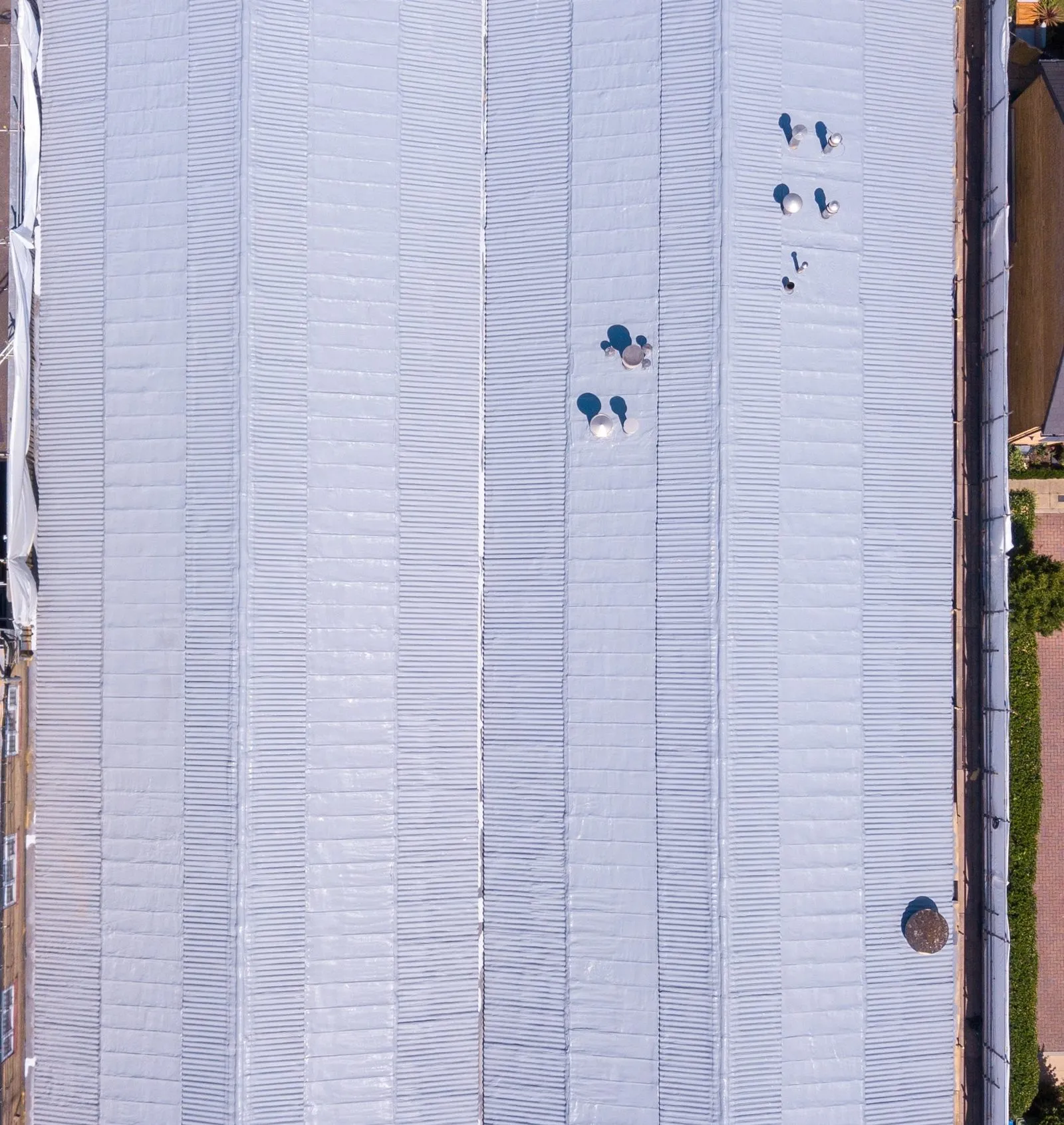
Interior and exterior asbestos roof encapsulation
Interior: foam to the underside
Applied from inside, the specified closed-cell foam treats the roof underside and provides insulation as part of an assessed encapsulation project. Nexseal LE is the interior closed-cell system used within the group. Thermal performance, condensation risk, access and any required protective finish are considered for the building.
Exterior: roofing foam and a weatherproof finish
Applied from above, a suitable roofing foam forms part of an external system over the assessed roof surface. The complete build-up includes compatible waterproofing and UV protection, with details at ridges, rooflights, drainage and penetrations. Read about external spray foam roofing and encapsulation.
Both sides, where the survey supports it
Some buildings need an internal thermal upgrade as well as work to the weather-facing roof. The survey considers the whole construction and moisture conditions before specifying either route or a combination. Neither approach replaces structural repairs or the ongoing duty to manage the asbestos.
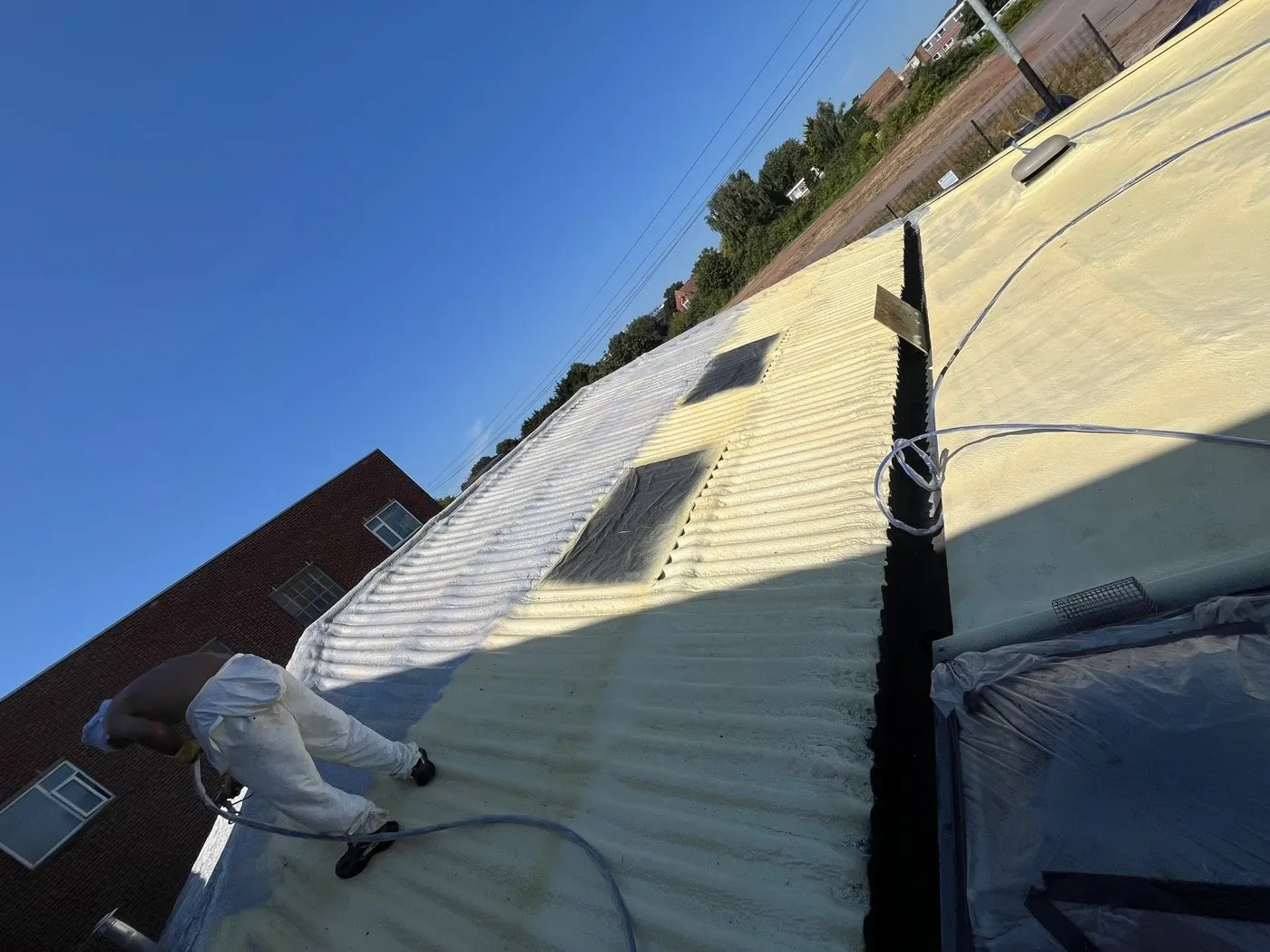
See the external roofing foam and finished membrane at Dove Lane, Bristol →
What is asbestos roof encapsulation?
Encapsulation covers asbestos-containing material while leaving it in place. For a commercial asbestos-cement roof, the first question is whether the material and roof condition make that approach suitable. It is not asbestos removal, and it does not turn the roof into an asbestos-free structure.
ThermoFoam assesses spray foam insulation and encapsulation projects on commercial asbestos-cement roofs. The proposed treatment, access and preparation need to be considered alongside the roof condition and the building's future use. Damaged or unsuitable roofs may require a different approach.
Looking for an asbestos encapsulation spray? A roof insulation specification is different from a general-purpose sealant or DIY coating. Send us your roof details and existing survey information so the appropriate next step can be assessed.
The benefits for asbestos roofs
In-Place Option
Encapsulation leaves suitable asbestos-cement material in place, subject to assessment.
Assessed Method
The roof condition and proposed work determine the method, controls and licensing requirements.
Plan The Work
Access, exclusion areas and the installation programme are planned around the building and assessed scope.
Surface Encapsulation
The proposed treatment covers a suitable assessed surface; it does not remove the underlying asbestos.
Condensation Control
Insulation can help control surface condensation when the build-up and moisture conditions are assessed.
Condition Comes First
Suitability depends on the roof condition and management plan; insulation does not replace structural repairs.
Specify the system for the application
Photo: external roofing foam at Dove Lane. Interior and exterior systems require different specifications.
An interior insulation specification and an external roofing system use different build-ups. Select the foam and any protective or weatherproof finish for the assessed application.
The proposed spray foam system is specified for the assessed roof and building use. Any preparation must follow the asbestos method of work. The foam forms an insulating layer over treated surfaces; it does not replace the roof structure or remove the need for ongoing asbestos management.
- Work category determined by the asbestos risk assessment
- Specified coverage over the assessed surface
- manufacturer-backed product warranty, subject to specification
- Interior foam or external roofing system, specified for the roof
Enverge Nexseal LE — verified performance
Typical published product values. They do not establish the U-value or fire performance of the complete building assembly. Full technical specification →
Is encapsulation suitable for your asbestos-cement roof?
HSE identifies encapsulation of asbestos-containing materials in good condition as an example of non-licensed work. The actual work category depends on the material, its condition and the planned task. A risk assessment and appropriate training and controls are still required. See HSE guidance on non-licensed asbestos work.
Encapsulation leaves the asbestos in place. Its location, condition and treatment must remain part of the building's asbestos management arrangements, with future inspection and work planned accordingly.
Encapsulation, roof repairs or removal?
The survey should distinguish condensation on the underside from water entering through damaged sheets, fixings or junctions. An underside insulation treatment is not an external roof waterproofing system or a structural repair. Repair and replacement requirements need to be assessed separately.
What affects the cost?
Roof area, condition, access, preparation, the insulation specification and any separate repairs affect the quotation. Compare options on the complete scope, including ongoing management, rather than assuming encapsulation is always the cheapest route.
Have the building postcode, approximate roof area, photographs taken from a safe position and any existing asbestos survey available when you request a roof assessment. Our asbestos roof encapsulation guide introduces the service in more detail.
Commercial asbestos roof surveys across the UK
Send your site postcode to discuss coverage, survey arrangements and access for your project.
From enquiry to warranty
Enquire
Tell us about the roof and existing asbestos survey.
Survey
Assess roof condition, access and proposed use.
Specify
Recommend an approach for the assessed roof.
Install
Approved applicators, minimal disruption.
Warranty
Handover pack & system-specific warranty.
External foam and encapsulation in practice
Dove Lane, SAICA and Surbiton — real roofs, specified systems and documented installation work.
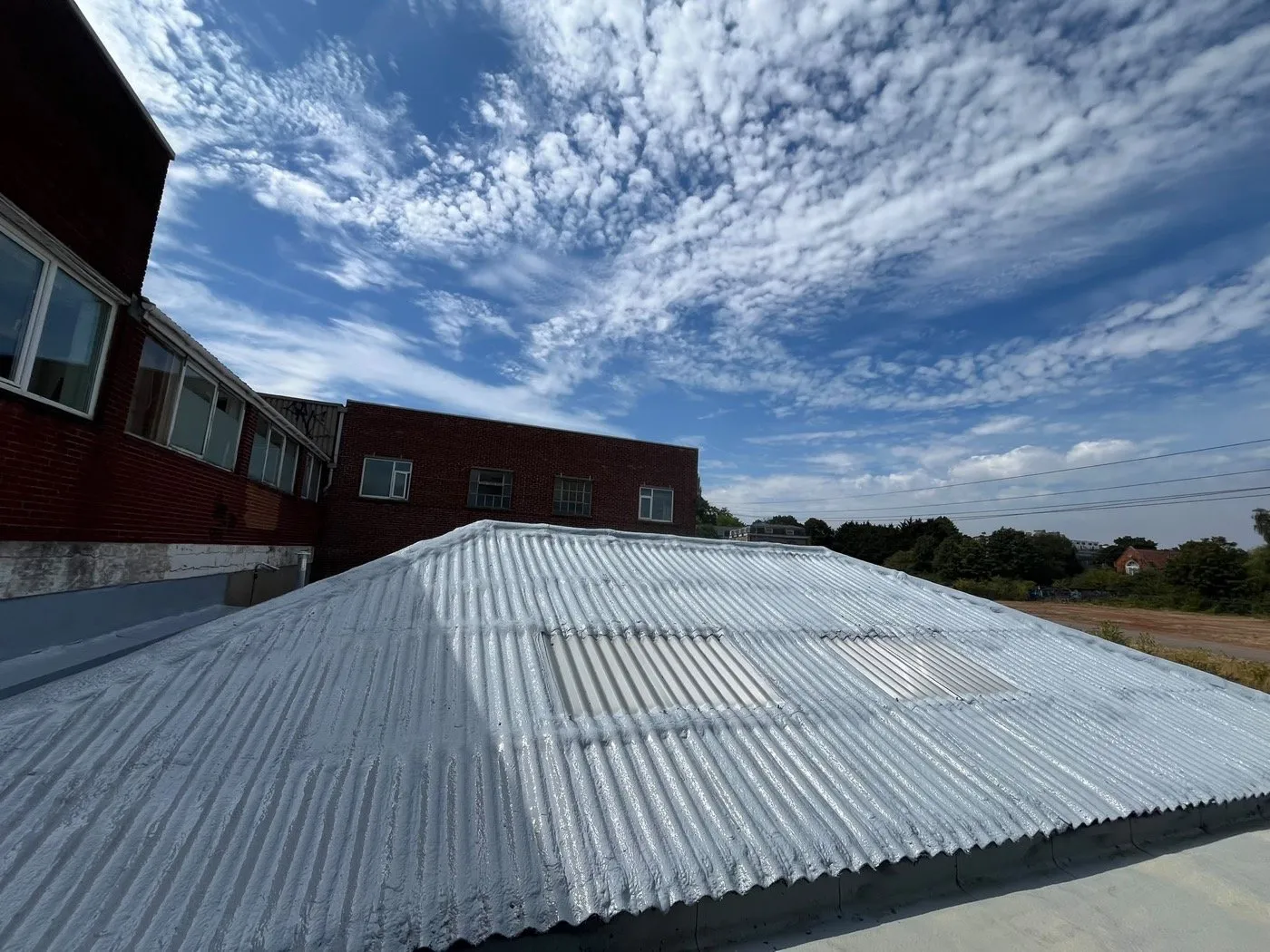
Dove Lane, Bristol
204 m² · Purios HR roofing foam, Impermax membrane and Colodur finish.
View the project →
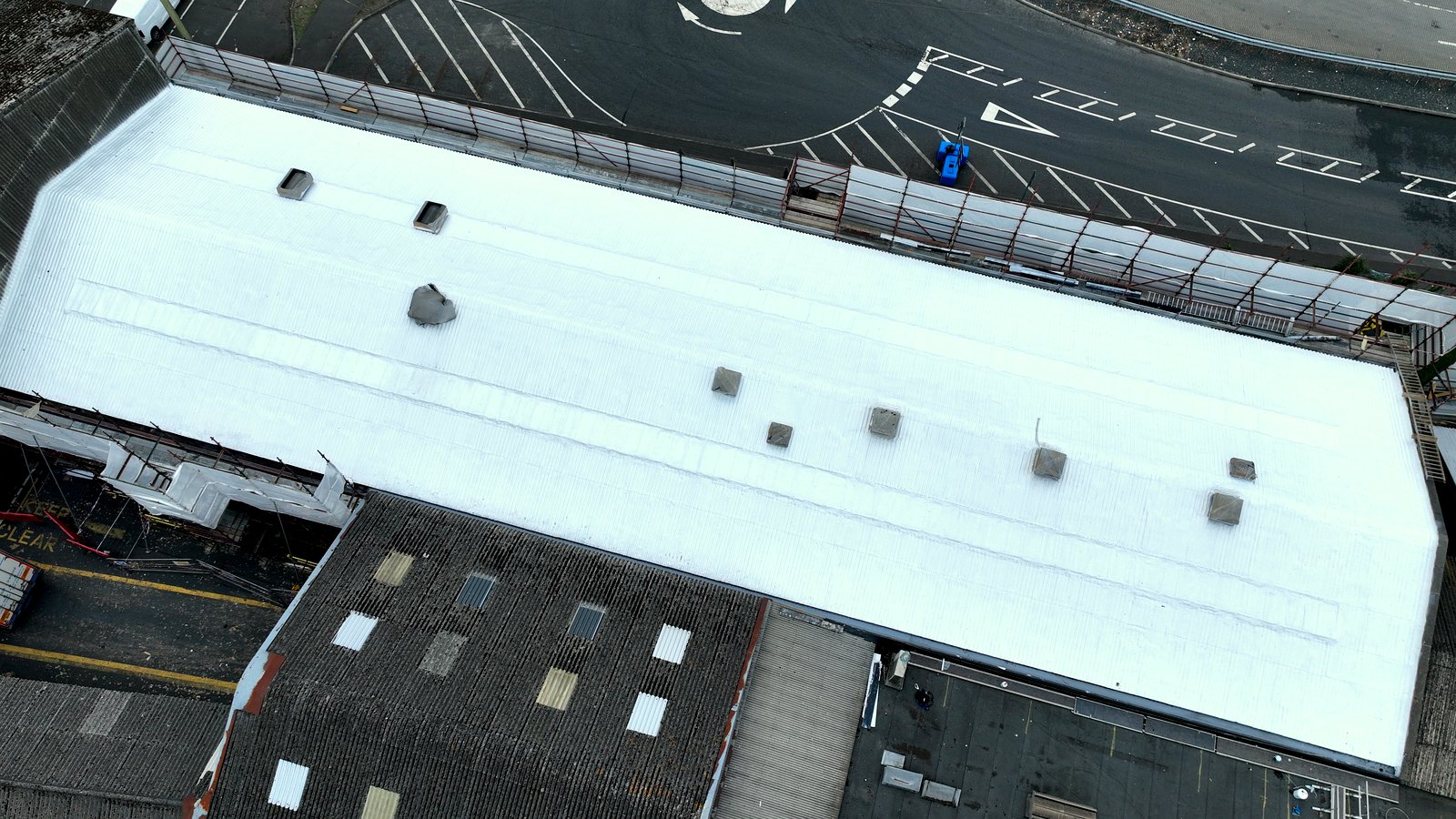
SAICA, Warrenpoint
1,090 m² · Unit 3 roofing foam with GacoFlex U91 and U92 coatings.
View the project →
Global House, Surbiton
1,575 m² · Closed-cell roofing foam with a GacoFlex S42 silicone finish.
View the project →
Get a quote for your project
Send us your building details and our technical team will specify the right system and a clear budget. No obligation.
Asbestos roof encapsulation questions
Do I need to remove the asbestos first?
Encapsulation leaves asbestos in place, but it is only an option where assessment finds the material and roof suitable. Removal or other remedial work may be appropriate for damaged or unsuitable roofs.
Is spray foam encapsulation licensed work?
The work category must be determined by an asbestos risk assessment. HSE lists encapsulation of asbestos materials in good condition as an example of non-licensed work. Material condition and the planned task can change the requirements.
Will the roof still appear on an asbestos survey?
Yes. Interior and exterior encapsulation leave the asbestos in place. Its presence and the treatment need to remain recorded in the asbestos register and management plan, with ongoing inspection and future work considered.
Does it stop roof leaks as well as condensation?
Condensation and water ingress are different problems. Insulation may help control condensation when correctly specified. Leaks, damaged sheets, fixings and junctions need separate assessment and repair; an underside foam treatment is not an external waterproofing system.
What buildings is this service for?
Commercial and agricultural buildings with asbestos-cement roofs, including warehouses, factories and farm buildings, subject to assessment. This service is not a general treatment for every type of asbestos-containing material.
Is asbestos roof encapsulation the same as removal?
No. Encapsulation covers material in place; removal takes it away. The appropriate approach depends on condition, the planned work and the future use of the building.
Is encapsulation cheaper than removal?
It may avoid some removal and replacement work where it is suitable, but the total cost depends on the roof condition, access, preparation, repairs and specification. A survey is needed for a meaningful comparison.
Is the roof assessed first?
Yes. Roof condition and existing asbestos information must be assessed before a treatment is proposed. The method of work and management arrangements need to be appropriate to the actual site.
Can you encapsulate the outside of an asbestos roof?
Yes, where assessment confirms suitability. The exterior route uses an appropriate roofing foam with the specified compatible waterproofing and UV-protective finish. Roof condition, asbestos controls and safe access determine the method.
Can you combine internal and external spray foam?
Both routes can be considered where the survey supports a combined system. The specification must consider the complete roof build-up, moisture conditions and the purpose of each layer.
Insulate your asbestos roofs the right way
Specialist commercial spray foam, installed UK-wide by the Duratite Group's spray foam specialists.
Book a Free Survey →or call 01208 832 602