Updated 22 September 2026 · ThermoFoam
Start with the area and the result you need
A useful commercial spray foam quotation identifies the surfaces being treated, the insulation specification and the work needed to deliver it. Floor area is not the same as roof area, and a roof-only treatment is not the same job as insulating the walls and roof.
Explain the purpose first: reducing heat transfer, addressing surface condensation, fitting out a container or refurbishing an external roof. The warehouse, container and external roofing services involve different scopes. A price for the foam alone cannot describe all three.
The items that change the price
| Quotation item | What to confirm | Why it matters |
|---|---|---|
| Measured area | Roof, walls, soffits, doors and exclusions | Dimensions, roof slope and the surfaces included determine coverage. |
| Product and depth | Named product, specified thickness and performance brief | More thickness changes material demand; the depth must suit the proposed construction. |
| Preparation | Repairs, corrosion, coatings, contamination and suitability | Preparation or repairs can be a separate part of the programme and budget. |
| Access and protection | Working height, platforms, stock and equipment | Restricted access or occupied premises may require phased work and additional protection. |
| Protective finish | Internal lining/coating or external weatherproofing | The completed system may include substantial work beyond applying foam. |
| Commercial terms | VAT, inclusions, exclusions, payment stages and validity | Compare complete totals on the same basis, including assumptions and separate work. |
A simple example: why thickness changes the scope
For illustration, 500 m² covered to 50 mm represents 25 m³ of finished insulation volume. The same area at 100 mm represents 50 m³. These are geometric examples, not recommended specifications or quantities of liquid chemicals to order. Profile, installation allowances and the required build-up also matter.
Doubling thickness does not mean the complete quotation simply doubles: access equipment, preparation and mobilisation are different cost components. Ask how the quoted scope changes rather than extrapolating a headline rate.
Compare the complete installation, not just a rate
Give each contractor the same brief. Check whether quotes include the same surfaces, product, depth, preparation, finish and access arrangements. A lower total may cover less work; a higher total may include repairs or protective finishes omitted elsewhere.
For an exterior roof, compare the foam, waterproofing, UV protection and roof details as one specified system. For an interior, identify any required lining or coating and the treatment of vents, rooflights and service access.
Ask for the basis of any energy-saving or payback estimate. It should reflect the building’s existing condition, heating use, operating hours and assumptions. No universal saving percentage follows from choosing spray foam.
A recorded project helps explain the specification
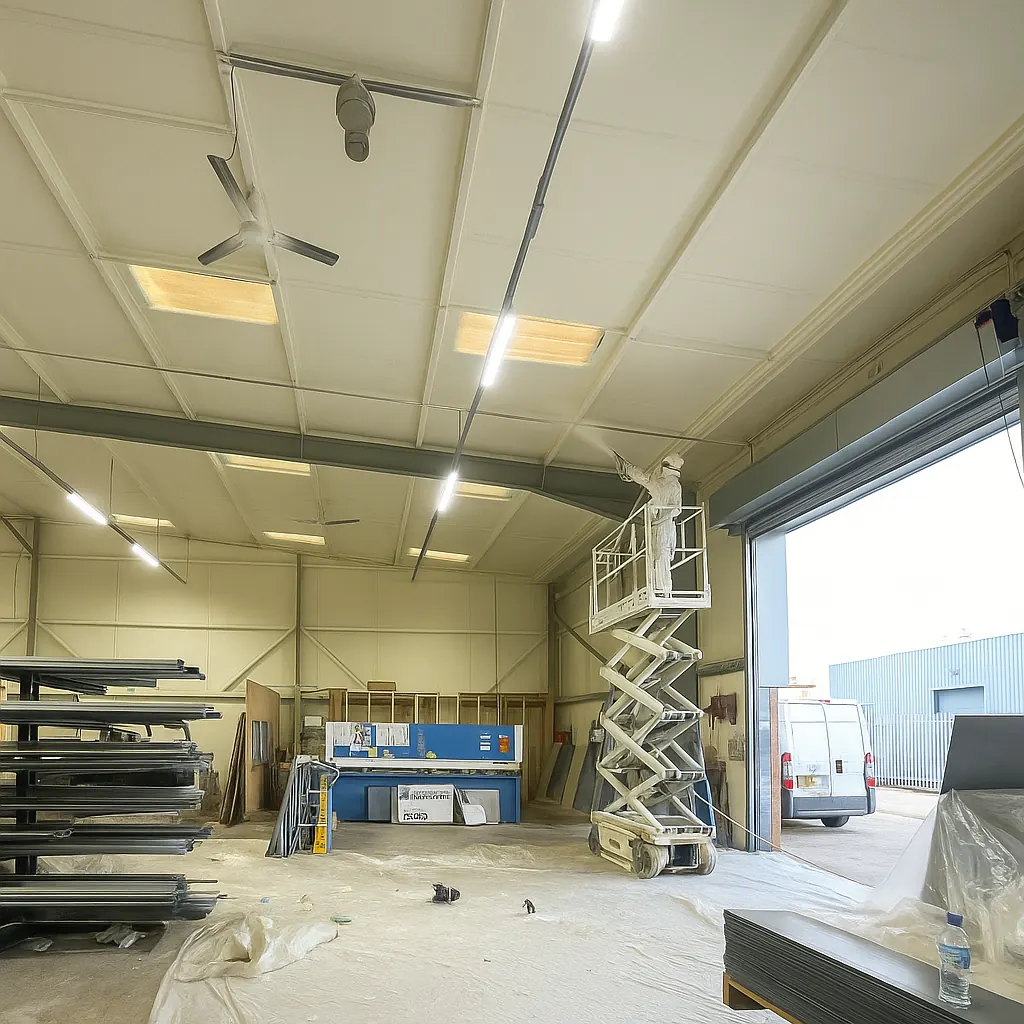
TJW Grab Hire’s Bournemouth warehouse provides a documented example of a specified roof installation. Its dimensions and programme are context for that project, not a price or timescale promise for another building.
Send a brief that makes the first discussion useful
Include the postcode, approximate dimensions, building use, roof material, safe photographs and any drawings or thermal specification. Add the access height, working hours, occupied areas, known leaks and your preferred programme.
ThermoFoam can review that information and explain the survey requirements. A preliminary discussion can identify scope and missing information; the written quotation should make clear what has been confirmed and what remains subject to inspection. Send your project details.
Application photography