Timber and moisture
Check damp, decay and the condition of supporting timbers before proposing a treatment. The design must consider ventilation and the ability to inspect vulnerable areas.
Insulation for accessible floor undersides and voids, specified around floor construction, ventilation, services and maintenance.
Discuss your project →A suspended timber floor, concrete slab and metal deck each need a different assessment. Before discussing foam, establish the construction, the condition of the floor and what lies beneath it. Access to the underside can be the main practical constraint.
The insulation should form part of a defined floor build-up. That includes how it meets walls and supports, how moisture is managed and which services or ventilation paths must remain accessible. A poorly understood void should be investigated before it is covered.
Check damp, decay and the condition of supporting timbers before proposing a treatment. The design must consider ventilation and the ability to inspect vulnerable areas.
Map wiring, pipework, valves and inspection points. Plan whether sections need to remain clear and how the installer can safely reach the required surfaces.
Provide the thermal target and intended use above and below the floor. Junctions, protective finishes and the complete construction matter alongside foam thickness.
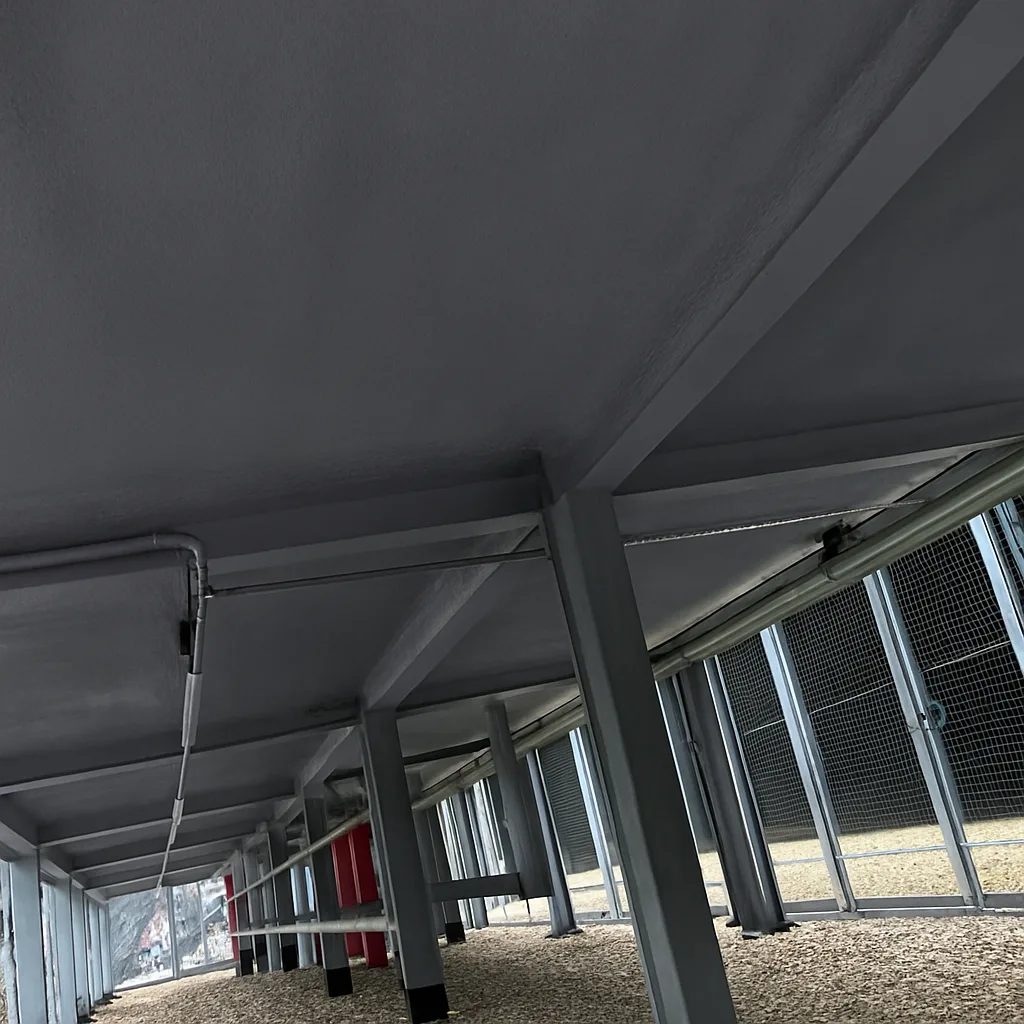
This accessible concrete-soffit project shows how the underside of a slab was insulated and finished. Read the documented substrate, system and installation sequence; timber floors and concealed ceiling voids require a different assessment.
Read the project case study →Send photographs, dimensions, site location and the intended use. Include known defects and the outcome you need, such as reducing heat loss or addressing cold-surface condensation.
The survey establishes the accessible substrate, preparation, moisture conditions and practical installation scope. Drawings and existing records help resolve interfaces with other parts of the building or vessel.
Compare the complete work package: preparation, insulation, protective finish, access and reinstatement. Agree responsibilities and the programme before the work begins.
Arrange inspection before the insulation is concealed. Keep the agreed specification, product details and installation records with the asset’s maintenance information.
Understand commercial spray foam costs · Compare insulation approaches
No universal approach is appropriate. Timber condition, ventilation, ground moisture and the proposed build-up need assessment before selecting a system.
Required ventilation routes must be considered and preserved by the design. They should not be blocked as an improvised way to stop draughts.
The treated area, substrate condition, specified thickness, preparation, access equipment and finish all influence the price. Include the work programme and any removal or reinstatement in the enquiry so quotations cover the same scope.
Confirm the product and application, prepared substrate, intended thickness, junction details, protective finish and access arrangements. Ask for the relevant product information, installation records and the specific terms of any proposed warranty.
Send us your building details and our technical team will specify the right system and a clear budget. No obligation.